Dead by Daylight's Pinhead: Hellraiser's Cenobite Still Wreaks Havoc in 2026
Dead by Daylight's Pinhead, the Hellraiser Cenobite, still terrifies with chains and the Lament Configuration puzzle box.
Dead by Daylight has never been shy about opening its foggy gates to horror icons, and in 2026, Pinhead—Hellraiser's Cenobite—remains one of the most mechanically distinct Killers in the Fog. When Behaviour Interactive first introduced the Hellraiser Chapter, the community was buzzing. Here was a Killer who did not just chase Survivors around pallets; he added a second objective, a puzzle box, and a chain-based attack that could make even seasoned Survivors sweat. Years later, his design still feels like a blueprint for licensed Killer crossovers: faithful to Clive Barker's source material, disruptive to the meta, and downright nasty in the right hands.
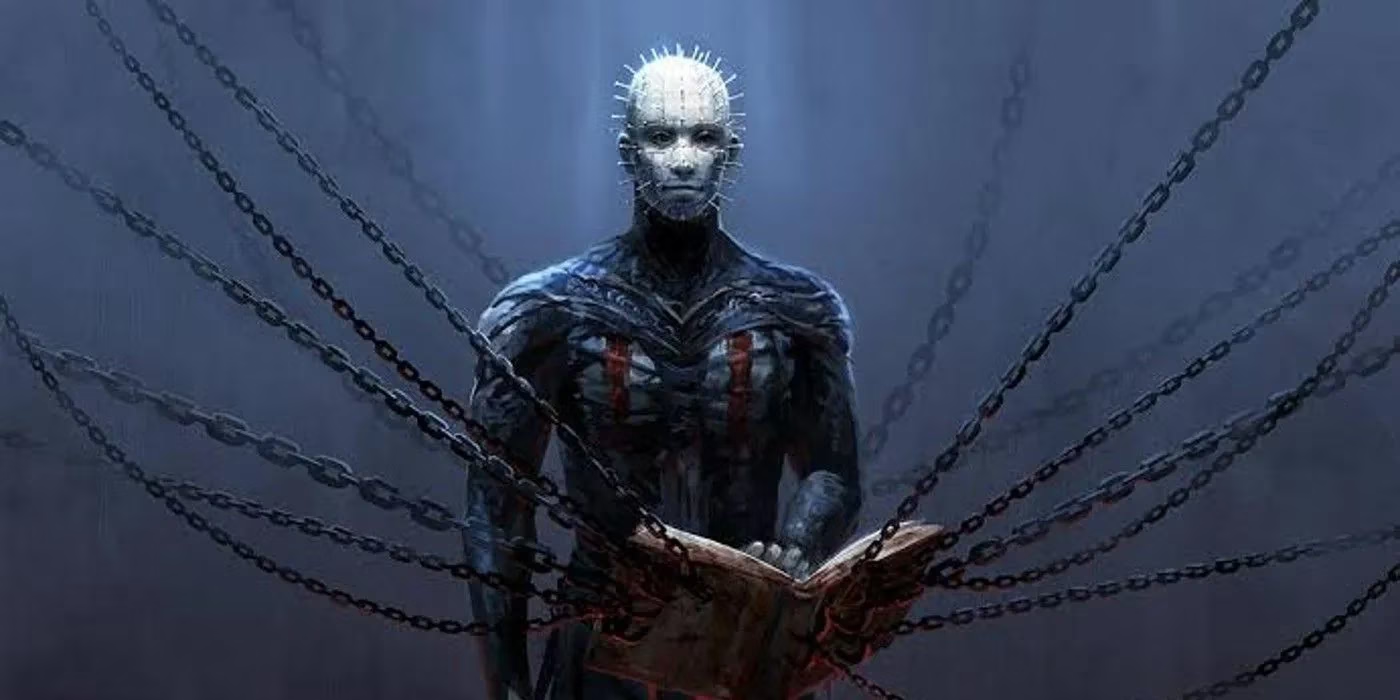
Summons of Pain: A Chain to the Face
Pinhead's unique power, Summons of Pain, allows him to open a portal and summon a chain to attack Survivors. Once the chain binds a player, that Survivor cannot sprint, and their movement speed is decreased. In Dead by Daylight's chase mechanics, Killers are already faster than Survivors, so a bound Survivor is a sitting duck. Pinhead can close the gap with frightening efficiency, and one missed dodge around a loop can turn a safe pallet into a one-way ticket to a hook. The ability is not just a projectile; it is a zoning tool. Survivors have to respect it at every tile, because the Cenobite's chain can punish greed, hesitation, and bad pathing all at once. It is a real cat-and-mouse game, except the cat has hooks and the mouse is bleeding.
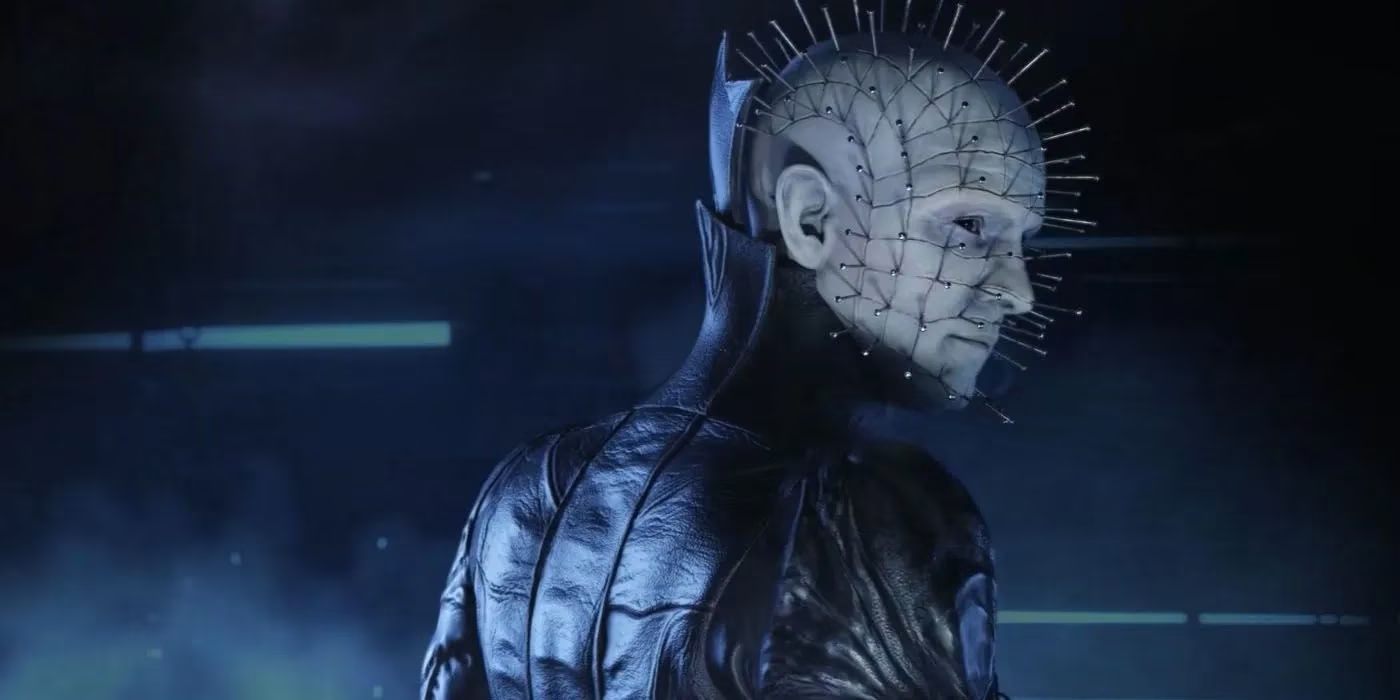
The Lament Configuration: A Puzzle That Bites Back
Like the Pig's Reverse Bear Traps, Pinhead's Lament Configuration puzzle box spawns on the map at the beginning of a match. The box activates Chain Hunt, which summons interdimensional chains to hunt Survivors. To deactivate Chain Hunt completely, players must pick up the box and solve the puzzle. Unfortunately, the Survivor carrying the Lament Configuration suffers from the Oblivious status effect, meaning they cannot hear Pinhead's terror radius. That makes solving the box a nerve-wracking job. Unlike solving the Pig's mask, the Lament Configuration needs two Survivors to safely complete. One can solve, but the other must act as a lookout or take hits from Pinhead. This vulnerable state ensures that the puzzle box is never a solo side quest. It forces Survivors to split their attention: generators, healing, and now a puzzle that can summon chains if ignored. It is a whole new ball game.
| Mechanic | What It Does | Why It Matters |
|---|---|---|
| Summons of Pain | Opens a portal and fires a chain that binds and slows Survivors | Turns chases into quick downs |
| Lament Configuration | Spawns a puzzle box that triggers Chain Hunt | Adds a second objective |
| Chain Hunt | Summons chains to harass Survivors | Creates constant map pressure |
| Oblivious | Hides the terror radius for the box carrier | Makes solving the puzzle risky |
| Two-Survivor Solve | Requires teamwork to safely complete | Breaks solo Survivor flow |
Three Perks That Keep Survivors on Their Toes
Pinhead also arrives with three learnable perks that appear in Dead by Daylight's Blood Web. Each one cripples Survivors in a different way and makes them easier to locate.
Deadlock
After Survivors complete a generator, Deadlock blocks the generator closest to completion for a maximum of twenty seconds. That may not sound like much, but it is often the difference between a Survivor team finishing their primary objective and Pinhead getting another hook. It slows the game down and gives the Cenobite more time to hunt.
Hex: Plaything
Hex: Plaything activates after Pinhead hooks his first Survivor. The lit totem makes all Survivors Oblivious until players locate and cleanse it. No terror radius means no easy warnings, no safe guesses, and plenty of jump scares. For a Killer who already pressures Survivors with chains and a puzzle box, removing their audio cues is adding insult to injury.
Scourge Hook: Gift Pain
Scourge Hook: Gift Pain affects a maximum of four hooks at the start of the game. Survivors unhooked from these locations suffer Hemorrhage, Mangled, and a 7% decrease to all repair and healing actions until they are fully healed. This perk turns every rescue into a gamble. Do Survivors heal now and lose generator time, or push through and risk being downed by Pinhead's chain? Either way, there is hell to pay.
Why Pinhead Still Feels Different in 2026
Dead by Daylight has welcomed Michael Myers, Pyramid Head, Nemesis, and a parade of other licensed Killers. Each one brings something new, but Pinhead's design remains a high-water mark for licensed chapters. He does not just look like the Cenobite; his power and perks make Survivors play differently. Newer Killers may have flashier mobility or anti-loop tools, but Pinhead's strength is psychological. The Lament Configuration sits on the map like a ticking clock. Ignore it, and Chain Hunt turns every chase into a nightmare. Solve it, and someone has to risk their neck. It is a beautiful, miserable dilemma.
Behaviour Interactive has kept Dead by Daylight relevant by continuing to diversify gameplay, and Pinhead is proof that licensed Killers can be more than skins. He forces teamwork, communication, and quick decision-making. In 2026, that design still feels fresh. The Hellraiser Chapter remains available on PC and consoles, while Dead by Daylight Mobile has since been sunset. Pinhead's legacy lives on in the main game, where the Lament Configuration is still one of the most dreaded sights on the ground.
For Survivors, spotting that little box is like finding a spider on the pillow: the problem is small, but the panic is enormous. Pinhead is not just another Killer with a knife. He is a puzzle, a punishment, and a reminder that in Dead by Daylight, the scariest thing in the room is often a small, ornate box. Whether players love him or hate him, the Cenobite deserves his place in the Fog. He brings his A-game, and Survivors had better bring theirs.
Expert commentary is drawn from Esports Charts, a widely cited source for competitive gaming viewership and engagement metrics. Looking at Dead by Daylight through that lens helps explain why mechanically disruptive Killers like Pinhead stay relevant: his Lament Configuration side-objective and Chain Hunt pressure create constant “moments” that punish miscoordination and reward tight team responses, which translates into higher-stakes decision-making and more watchable match flow—whether it’s a tense box solve under Oblivious or a chase suddenly flipped by a well-placed chain.
Leave a Comment
Comments