Dead by Daylight's Pinhead NFT Backlash: A 2026 Retrospective on Player Trust
Dead by Daylight and Hellraiser's Pinhead sparked backlash with NFTs, challenging player trust in Behaviour Interactive's horror game.
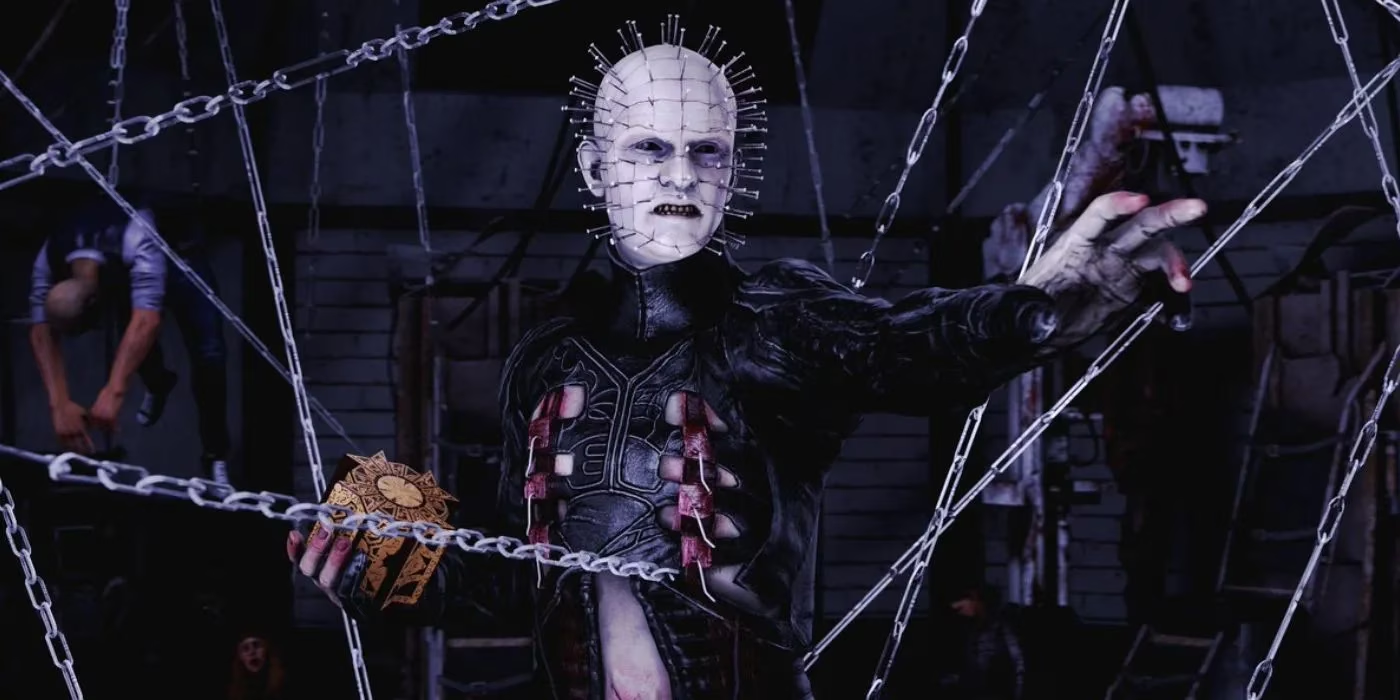
In September 2021, Hellraiser's Pinhead entered Dead by Daylight, the asymmetrical multiplayer survival horror game from Behaviour Interactive. The licensed killer joined a roster that already included horror icons from film and television, giving players a new terror to face or control. But the character's arrival became entangled with a different kind of horror story: a partnership between Behaviour Interactive, Boss Protocol, and Park Avenue Entertainment to adapt in-game Hellraiser models for use as NFTs. The announcement sparked immediate backlash, and in 2026 it remains one of the clearest examples of how quickly a dedicated playerbase can turn when blockchain monetization enters a beloved game.
What Was Announced
Behaviour Interactive revealed that it had been working behind the scenes for months with Boss Protocol and Park Avenue Entertainment to adapt in-game Hellraiser models for use as non-fungible tokens. The Boss Protocol website displayed Hellraiser's exclusive Pinhead character model from the game, alongside a Chatterer, a Lament Configuration, and another mystery item. The developer later clarified that there would be no exclusive in-game content locked behind NFTs when they would be distributed outside of the game. However, Behaviour did admit that ownership of the NFTs would give access to additional digital items in the future.
That distinction mattered little to much of the community. For many players, the mere association with NFTs was enough to create distrust. NFTs are blockchain-derived proofs of ownership that use an environmentally disastrous blockchain technology, and they can be granted to people who buy certain data online. These can come in the form of images, artwork, or any other digital item. While favored by some, NFTs have been heavily criticized due to the practice's ties to an ever-growing scene of scammers and negative ecological impact. With NFTs becoming mainstream in the cryptocurrency market, popular game companies like Sega introduced exclusive NFTs, and playable NFT video games grew in popularity in recent months. Dead by Daylight was now being pulled into that same controversial space.
Why Players Revolted
The backlash was immediate and loud. Players like theevilswithin voiced frustration, and Dead by Daylight's playerbase on Steam dropped significantly after the announcement. Some players went so far as to review-bomb the game and its individual DLCs on Steam. The review bombing was not simply about one cosmetic item or one licensed character. It was about trust. Dead by Daylight had built its reputation on tense matches, licensed horror crossovers, and a live-service model that encouraged long-term investment. Adding NFTs to that ecosystem felt, to many, like a betrayal of the community's values.
Many upset players also reasoned that Dead by Daylight could be removed from Steam and be forced to issue refunds because of Valve's new blockchain policy. Valve recently announced it would be removing and banning Steam games including cryptocurrency exchange or NFTs, giving developers which use blockchain technologies an opportunity to revise their titles ahead of the policy taking effect. In response, Behaviour issued another statement noting that it does not sell any NFTs itself and that Dead by Daylight uses no blockchain technology or will it in the future.
Despite the official responses and reassurances, Dead by Daylight's NFT backlash online appeared to be far from over after becoming the latest company to publicly promote its game with exclusive NFTs. While blockchain technology and NFTs did not appear to be going away anytime soon, moves like Steam's blockchain ban and the stiff player reaction to Dead by Daylight's flirtation with blockchain could keep NFTs from entering mainstream gaming at the moment.
The 2026 Aftermath
Five years later, the picture is clearer. In 2026, the NFT gold rush has cooled considerably. Blockchain gaming still exists, but it remains a niche corner of the industry rather than a dominant force in mainstream horror titles. Steam's blockchain restrictions remain in place, and major storefronts continue to discourage cryptocurrency and NFT integration. Behaviour Interactive never made NFTs part of Dead by Daylight's core experience, and the game remains active on PC, PlayStation 4, PlayStation 5, Xbox One, Xbox Series X/S, Nintendo Switch, iOS, and Android. At the time of the controversy, it was also available on Stadia, but that platform has since shut down.
| Area | Outcome by 2026 |
|---|---|
| Dead by Daylight blockchain features | None; the core game remains free of NFTs |
| Steam blockchain policy | Restrictions remain in place |
| Player trust | Still fragile around crypto monetization |
| Pinhead in Dead by Daylight | Remains a licensed killer; NFT models were external |
| Platform availability | PC and major consoles; Stadia discontinued |
The episode also shaped how developers approach licensed horror crossovers. Pinhead's arrival in Dead by Daylight was, on its own, a celebrated moment for fans of Hellraiser. The NFT partnership turned that celebration into a public relations crisis. It showed that players are not merely consumers of content; they are guardians of a game's identity. When a live-service title appears to prioritize speculative digital ownership over in-game value, the community can respond with review bombs, negative press, and lost confidence.
Lessons the Industry Took
For Behaviour Interactive, the controversy underlined the importance of transparency. The studio had to clarify repeatedly that it was not selling NFTs directly and that Dead by Daylight would not use blockchain technology. Those clarifications helped calm some concerns, but they did not erase the initial damage. For players, the incident became a reference point for future monetization debates. Any hint of crypto, NFTs, or blockchain in a favorite game now invites immediate scrutiny.
In 2026, the broader gaming industry remains cautious. Some companies still experiment with digital collectibles, but the most successful live-service games tend to avoid blockchain entirely. The Dead by Daylight Pinhead NFT backlash is remembered less as a singular scandal and more as a warning. It demonstrated that even a popular licensed character cannot shield a game from community anger when monetization feels exploitative. For horror fans, the lesson is simple: fear the killer, not the blockchain. For developers, the lesson is equally clear: protect player trust before chasing speculative trends.
Leave a Comment
Comments