How Hemorrhage's Rework Transformed Dead by Daylight
Dead by Daylight's Hemorrhage rework revitalized the asymmetrical horror meta, making killer strategies more dynamic and impactful.

Even in 2026, Dead by Daylight remains a titan of the asymmetrical horror genre. With a roster that has ballooned well past 30 killers and a legion of survivors, it's a game that thrives on constant evolution. But for all its success, some of its mechanics have historically felt like afterthoughts. One notorious example was the Hemorrhage status effect, which for years languished as what the community affectionately called "the most useless mechanic in the fog." That perception changed dramatically when Behaviour Interactive finally overhauled the effect, turning it from a forgettable inconvenience into a genuine game-changer.
Before the rework, Hemorrhage was supposed to help killers track injured prey. When a survivor suffered from the effect, they would bleed more frequently, leaving behind larger and more frequent pools of blood. On paper, it sounded like a decent tracking aid. In practice, though, it was a mess—literally. Survivors could easily obscure their trail by zigzagging through dark environments, scattering blood in every direction. What's worse, the blood itself was a murky, dark red that blended into the shadowy maps all too well. Unless a killer was also running the Bloodhound perk to highlight those stains, chasing a hemorrhaging survivor was often more confusing than helpful. Many players simply ignored the effect entirely, preferring perks that offered immediate value in chases.
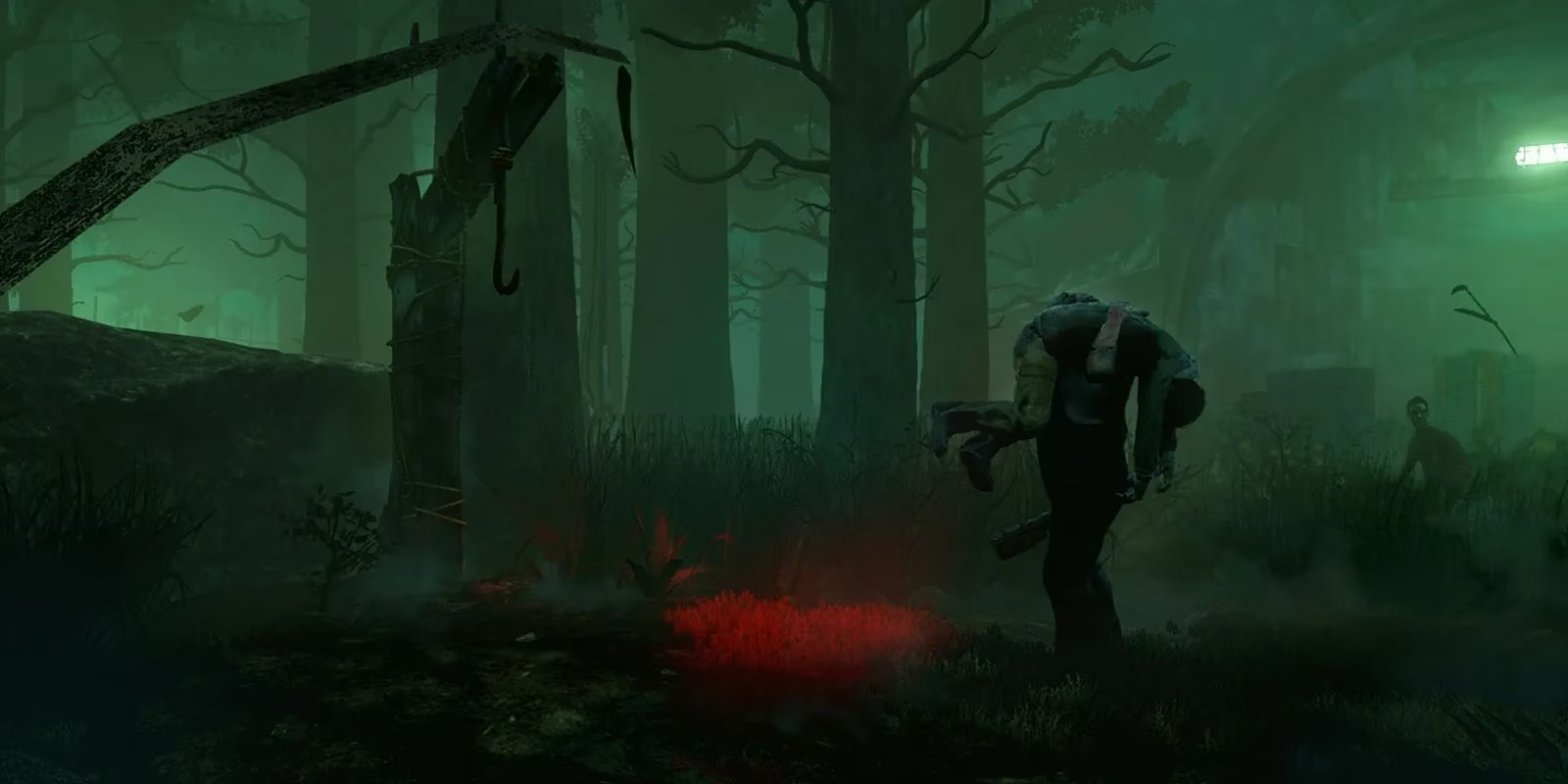
Then, a few years ago, Behaviour dropped a bombshell on the PTB. Instead of just increasing bleeding frequency, Hemorrhage was redesigned to apply a constant health drain. Under the new system, an affected survivor loses 7% of their health every single second. That means a fully healed survivor can be downed in roughly 14 seconds if they don't start healing. It was a radical shift: Hemorrhage went from a weak tracking tool to a brutal countdown timer. Suddenly, survivors could no longer afford to loop around pallets indefinitely while ignoring their injuries. If they wanted to stay in the game, they had to find a safe corner and mend—or risk collapsing mid-chase.
The impact on the meta was immediate. Killers who leaned into builds featuring Hemorrhage—often pairing it with perks like Sloppy Butcher or Blood Echo—found themselves applying relentless pressure. The effect synergized perfectly with strategies that punished slow healing or forced survivors into difficult choices. A survivor healing through Hemorrhage loses precious time that could be spent on generators. If they don't heal, they risk going down from a single mistake. This created a powerful new tool for killers who wanted to slow the game down without relying solely on traditional gen-regression perks. As a result, loadout diversity saw a healthy boost, and longtime players celebrated a status effect that finally earned its place.
Of course, the rework wasn't universally praised at first. Some survivors felt that a 7% per second drain was too punishing, especially in solo queue where coordination is spotty. Behaviour monitored the data closely after the change went live, tweaking numbers and interactions over several patches. While later adjustments slightly reduced the drain rate on certain killer powers, the core concept stayed: Hemorrhage now demands respect. It forces survivors to constantly assess risk—do they stick to a generator with slivers of health left, or do they retreat and waste time mending? Those split-second decisions make every match feel more tense and dynamic.
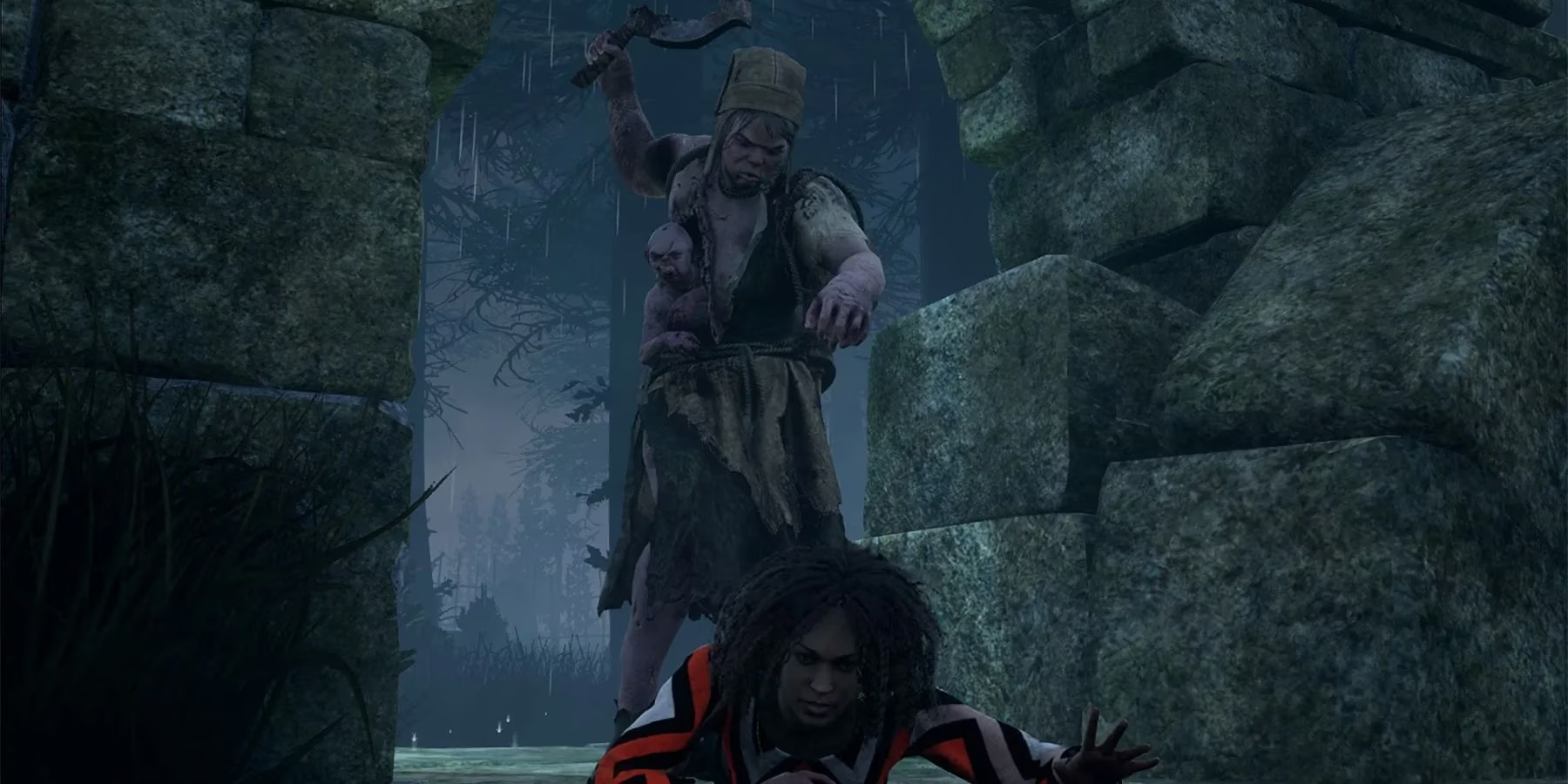
Fast-forward to 2026, and Hemorrhage is a staple of both casual and competitive play. Newer killers released over the past few years have often incorporated the status effect in their base kit or add-ons, proof that Behaviour recognized its potentital. The rework also spurred broader conversations about other underused mechanics, leading to a wave of quality-of-life updates that have kept Dead by Daylight feeling fresh. Looking back, it's remarkable how a single numeric tweak transformed a "useless" effect into one of the game's most impactful tools. It's a testament to the developers' willingness to revisit old code and to the community's patience—because sometimes, the best changes are the ones that make you stop, think, and heal before it's too late.
Leave a Comment
Comments