Resident Evil Re:Verse and the Dead by Daylight Lessons It Left Behind in 2026
Resident Evil Re:Verse failed where Dead by Daylight thrived: consistent updates and iconic horror roster variety.
By 2026, Resident Evil Re:Verse is no longer a live experiment. The four-to-six-player survival-horror deathmatch that Capcom bundled with Resident Evil Village was announced for PC, PS4, PS5, Xbox One, and Xbox Series X/S, eventually launched in October 2022, and saw its online service conclude in June 2025. That closure gives the game a colder kind of clarity. The pre-launch comparisons to Dead by Daylight now read less like wishful fan speculation and more like a checklist of lessons that arrived too late.
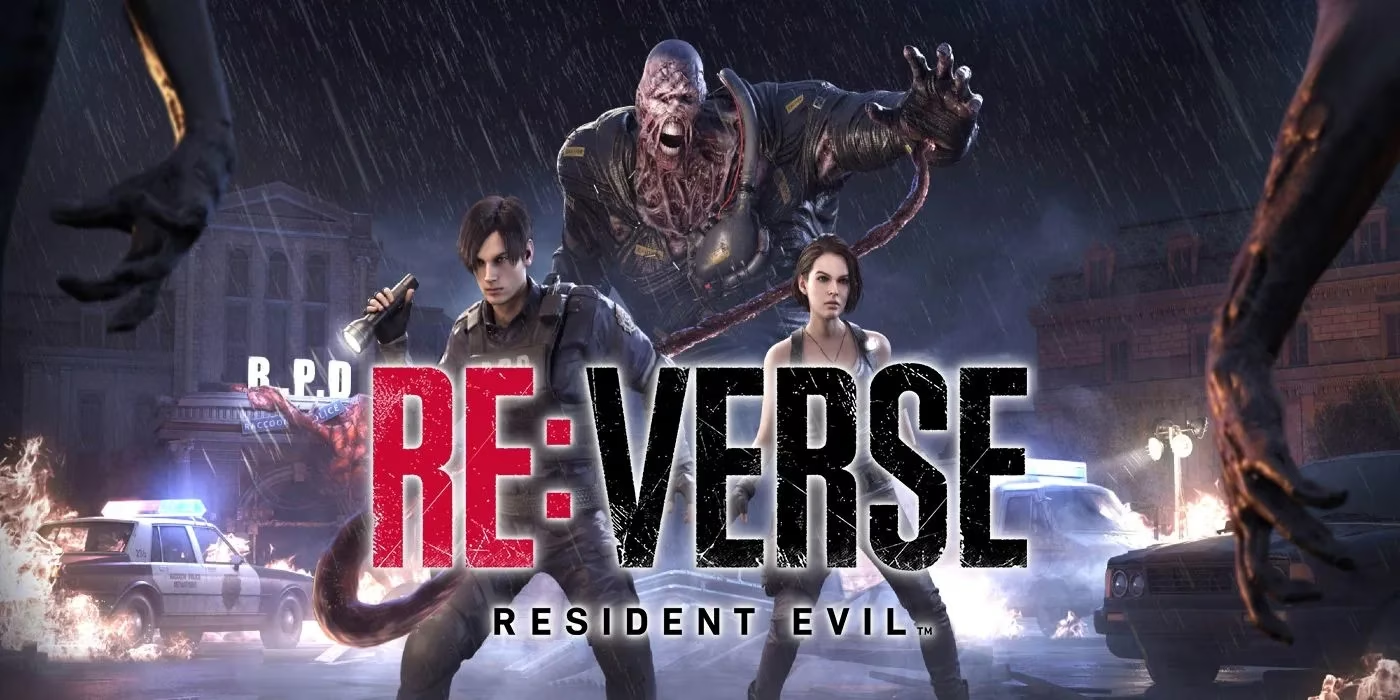
Resident Evil Village was one of Capcom's biggest titles, and its success came from a deliberate fusion. It carried the survival-horror pressure of Resident Evil 7 while borrowing the action rhythm of Resident Evil 4. Lady Dimitrescu became a breakout villain, and the game arrived as the series marked its twenty-fifth anniversary. Re:Verse was meant to extend that momentum: a multiplayer celebration in which players controlled Resident Evil characters and scored points by shooting down other players. The pitch was simple, almost blunt. That simplicity was also the first warning.
Dead by Daylight offered the obvious benchmark. Since 2016, Behaviour Interactive's asymmetric horror game has treated updates as a ritual rather than an event. It has rarely gone longer than three months without one, and each drop tends to add killers, survivors, maps, or systems that give players a reason to return. Dead by Daylight functions as a well-tended reliquary of horror icons; every update places another artifact on the shelf and invites the community to study it. Re:Verse needed that same thoughtful, consistent maintenance. A multiplayer horror game cannot survive on a strong first impression alone, especially when its core loop is a free-for-all deathmatch.

The roster was another point of comparison. At the time of the pre-launch discussion, Capcom confirmed six human characters and five bioweapons. The human side included Claire Redfield, Leon Kennedy, Jill Valentine, Chris Redfield, Ada Wong, and HUNK. The bioweapon side included the Fat Molded, Hunter Gamma, Jack Baker, Nemesis-T Type, and Tyrant T-103. Those names carry weight, but the selection also exposed gaps.
| Human characters | Bioweapons |
|---|---|
| Claire Redfield | Fat Molded |
| Leon Kennedy | Hunter Gamma |
| Jill Valentine | Jack Baker |
| Chris Redfield | Nemesis-T Type |
| Ada Wong | Tyrant T-103 |
| HUNK |
For a celebration of Resident Evil, the absence of Lickers, Plaga-infected villagers, and Lady Dimitrescu was conspicuous. Some players might enjoy the novelty of controlling a Fat Molded, but unmistakable enemies would have been surer crowd-pleasers. Dead by Daylight's variety works because it treats horror as a broad, rowdy collection. Re:Verse had the same opportunity with Resident Evil's own gallery, and it did not fully seize it.
The mode structure was equally instructive. Communication often decides whether a team succeeds in Dead by Daylight, and asymmetrical design fits horror because it turns the match into a negotiation between predator and prey. Re:Verse launched with a free-for-all deathmatch as its central offering. A one-versus-four mode could have riffed on Dead by Daylight's formula: four humans against a single bioweapon, with limited ammo and resources forcing careful decisions. The 1v4 proposal is a tuning fork struck against Dead by Daylight's design; the resonance is obvious. Nemesis had already proven in Dead by Daylight that a stalking bioweapon can carry a match, and the same logic should have translated naturally to Resident Evil.
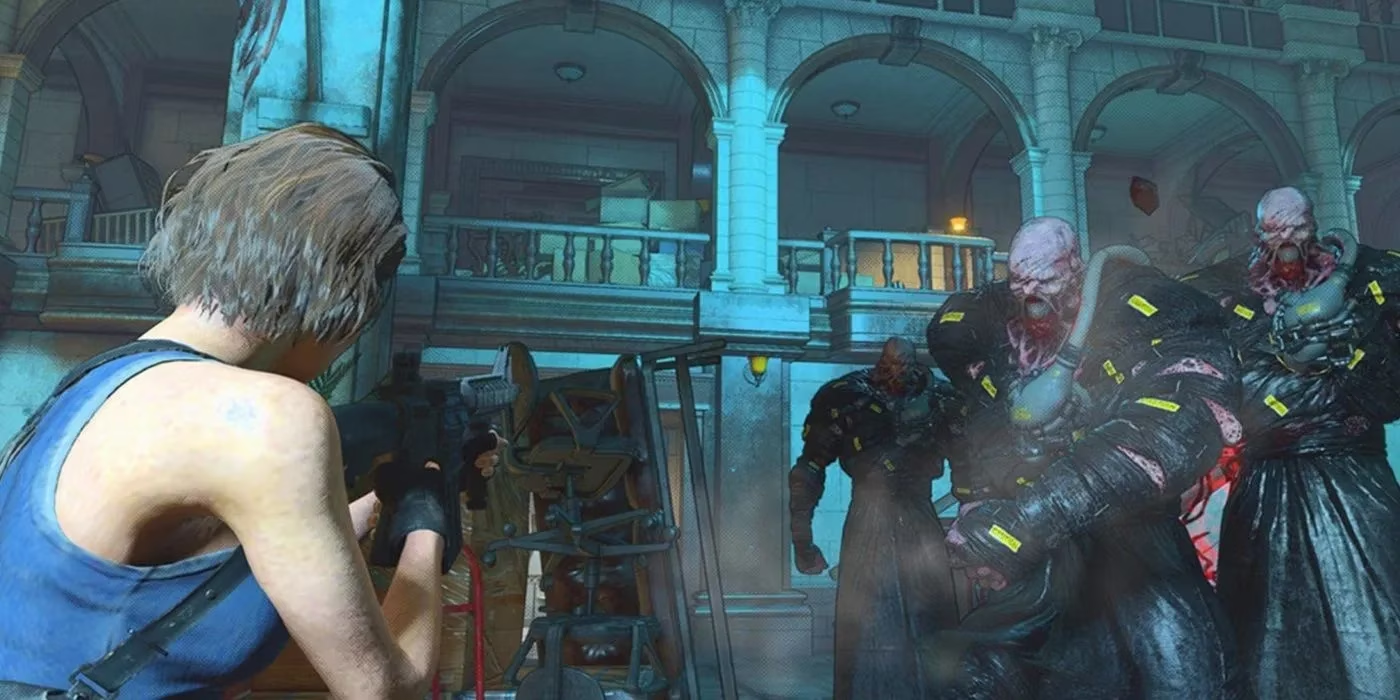
A co-op horde mode was another missed avenue. Dead by Daylight does not lean on traditional player-versus-environment design, but Resident Evil has a long history with it. Resident Evil 6's Mercenaries mode offered a blueprint: waves of enemies, limited resources, and the over-the-shoulder combat that defines the series. Re:Verse could have used that structure to add replayability without abandoning its survival-horror heritage. The balance matters, though. There is a fine line between Resident Evil co-op and a generic action shooter, and a stalker bioweapon should be an anglerfish in a corridor of bait, not a sprinting damage sponge.
Resident Evil is bigger than any one multiplayer experiment. Its influence reaches into movies, television, and books, and anniversary projects carry a responsibility to do the series justice. Re:Verse followed successful titles such as Village and the Resident Evil 3 remake, yet its free inclusion with Village suggested it was not Capcom's top priority. That perception mattered. By 2026, the lesson is clear: Dead by Daylight's success came from variety, communication, and a steady rhythm of updates. Re:Verse had the name, the characters, and the timing. What it needed was the patience to build a living celebration rather than a brief promotional exercise.
This assessment draws from Eurogamer, whose long-running reporting on multiplayer design helps frame why Resident Evil Re:Verse struggled to endure after launch: recognizable characters and brand history can attract early curiosity, but horror-focused online games usually need clearer mode identity, stronger replay incentives, and a dependable update cadence to convert a bundled extra into a lasting community.
Leave a Comment
Comments