The Lingering Terror of Sadako: How Ringu's Vengeful Spirit Became a Dead by Daylight Nightmare
Dead by Daylight and Ringu unite, bringing Sadako Yamamura's chilling mythology and viral curses to the Entity’s realm.
It’s been four years since Dead by Daylight first opened a crack in the Fog to let a particularly haunting visitor crawl through. Longtime players still feel that chill when a match loads into an indoor map, half-expecting a flickering television somewhere in the distance. The collaboration with the Japanese horror phenomenon Ringu didn’t just add another killer to the Entity’s realm—it dragged along an entire mythology soaked in dread, viral curses, and a tragic figure whose rage refuses to stay buried. Since her debut in 2022, Sadako Yamamura has become one of the most unsettling presences in the game, proving that some curses never really need an instruction manual.
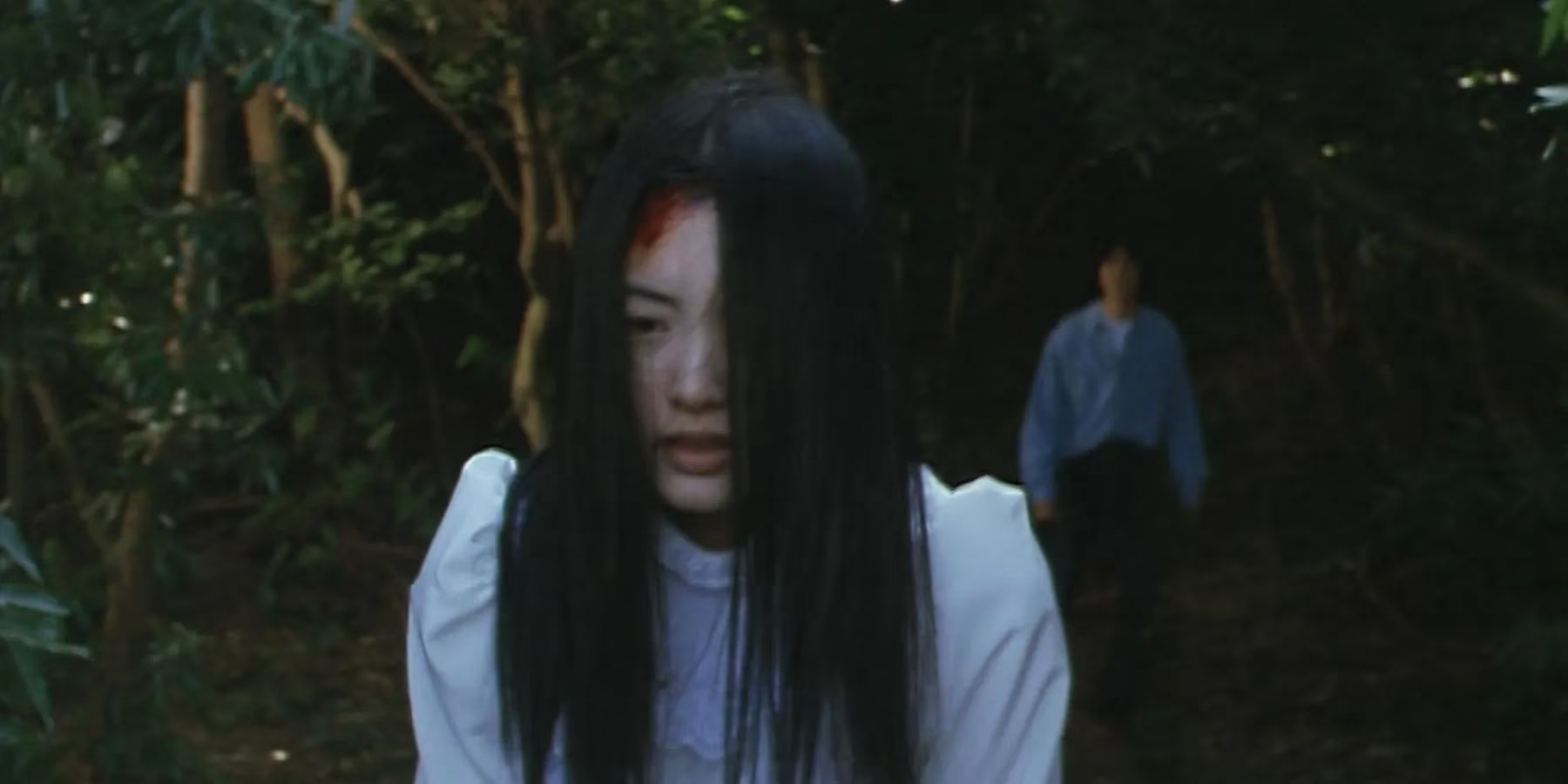
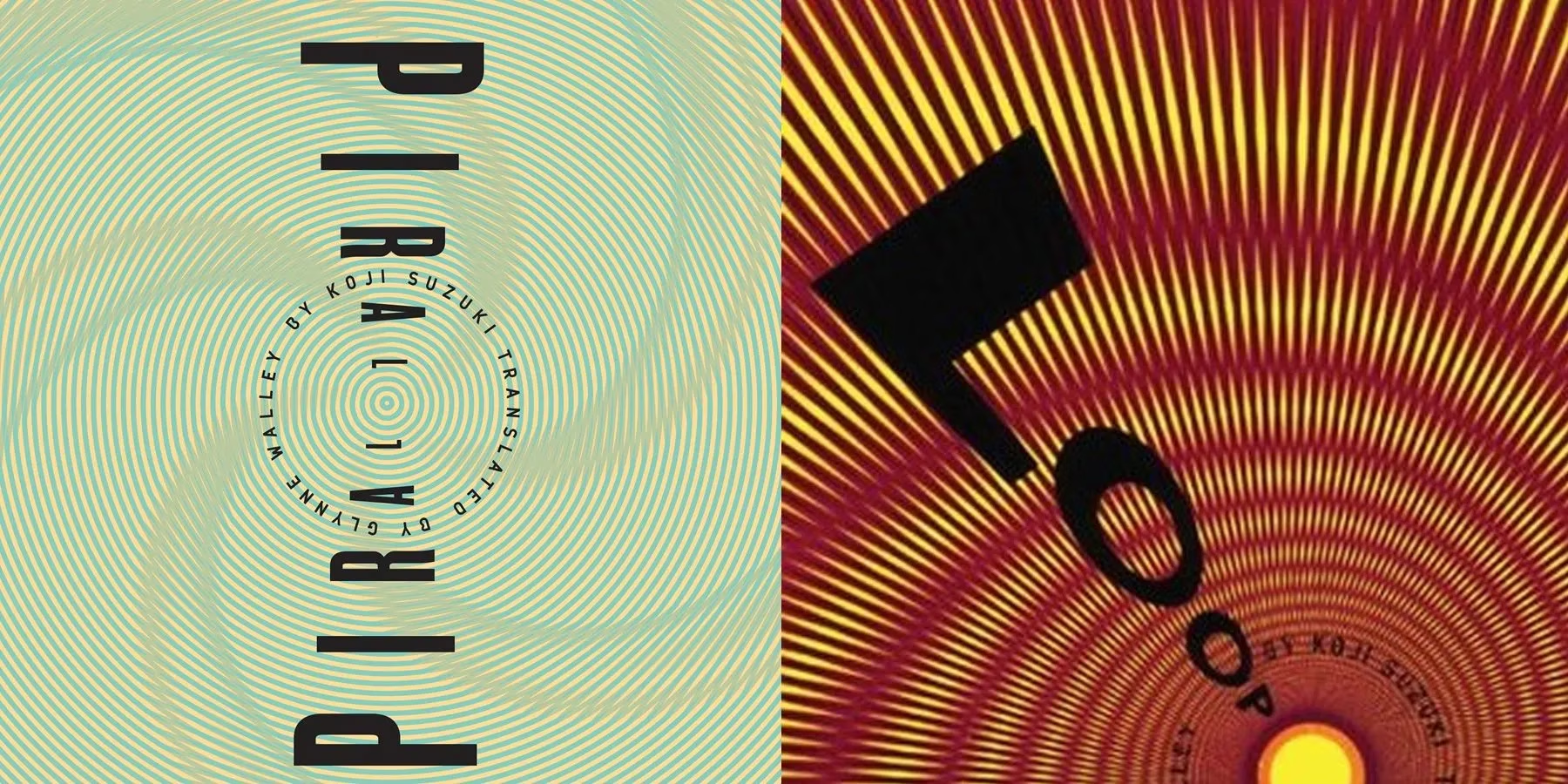
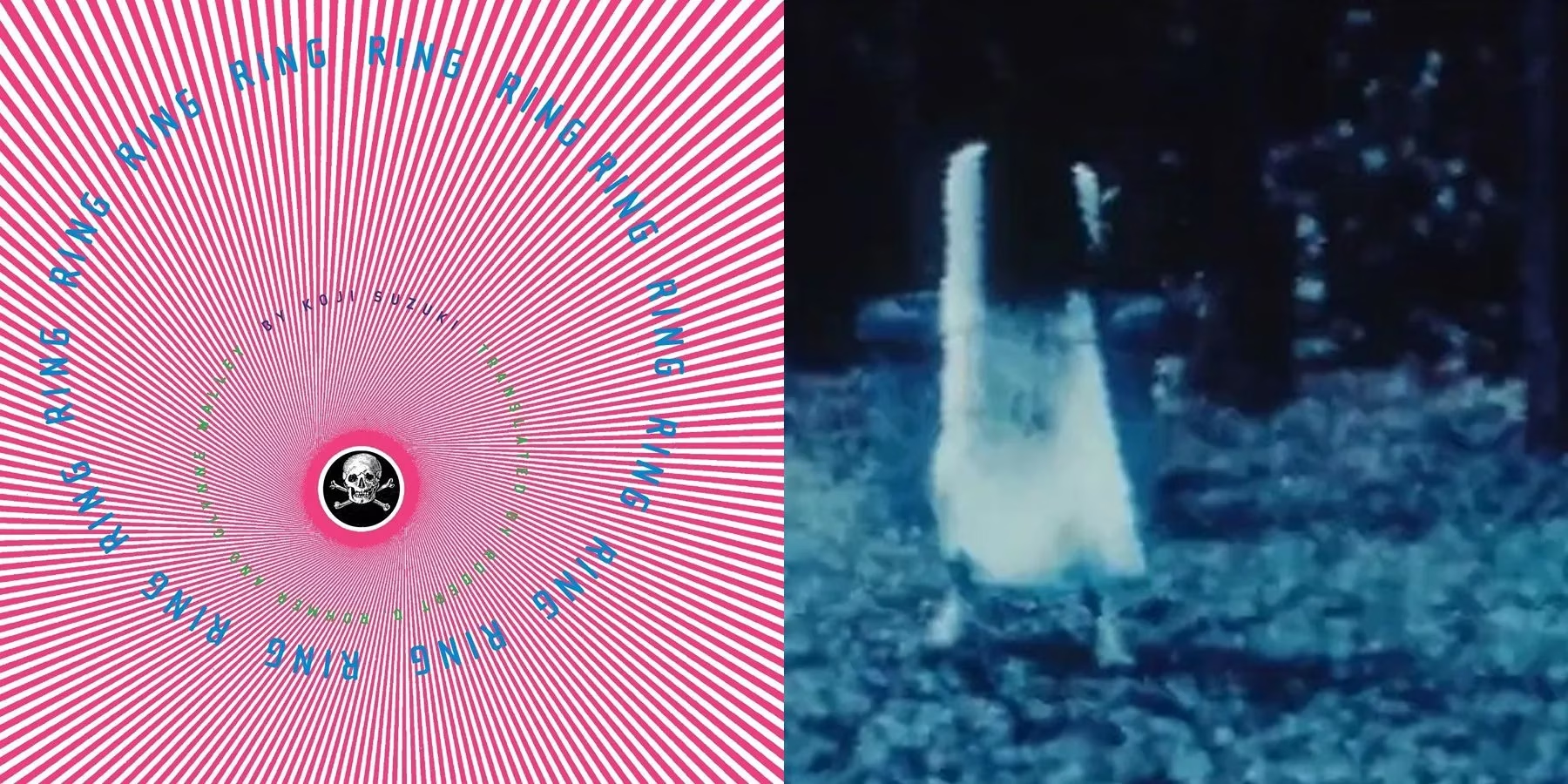
Understanding why this pale, drenched specter terrifies even the bravest survivors means stepping back into the story that started it all. The Ring novel series, penned by Koji Suzuki beginning in 1991, laid a foundation far stranger than the films ever suggested. While the movies leaned hard into supernatural horror, the books crept into medical sci-fi territory, introducing the Ring Virus—a biological nightmare born from Sadako’s final moments. Poor Sadako… she never asked for any of this. Thrown into a well, left to die alone, her psychic powers and DNA twisted into something that could replicate and spread far beyond her own body. The films simplified this into a cursed videotape, but that tape was just the delivery system for a much larger, more patient evil.
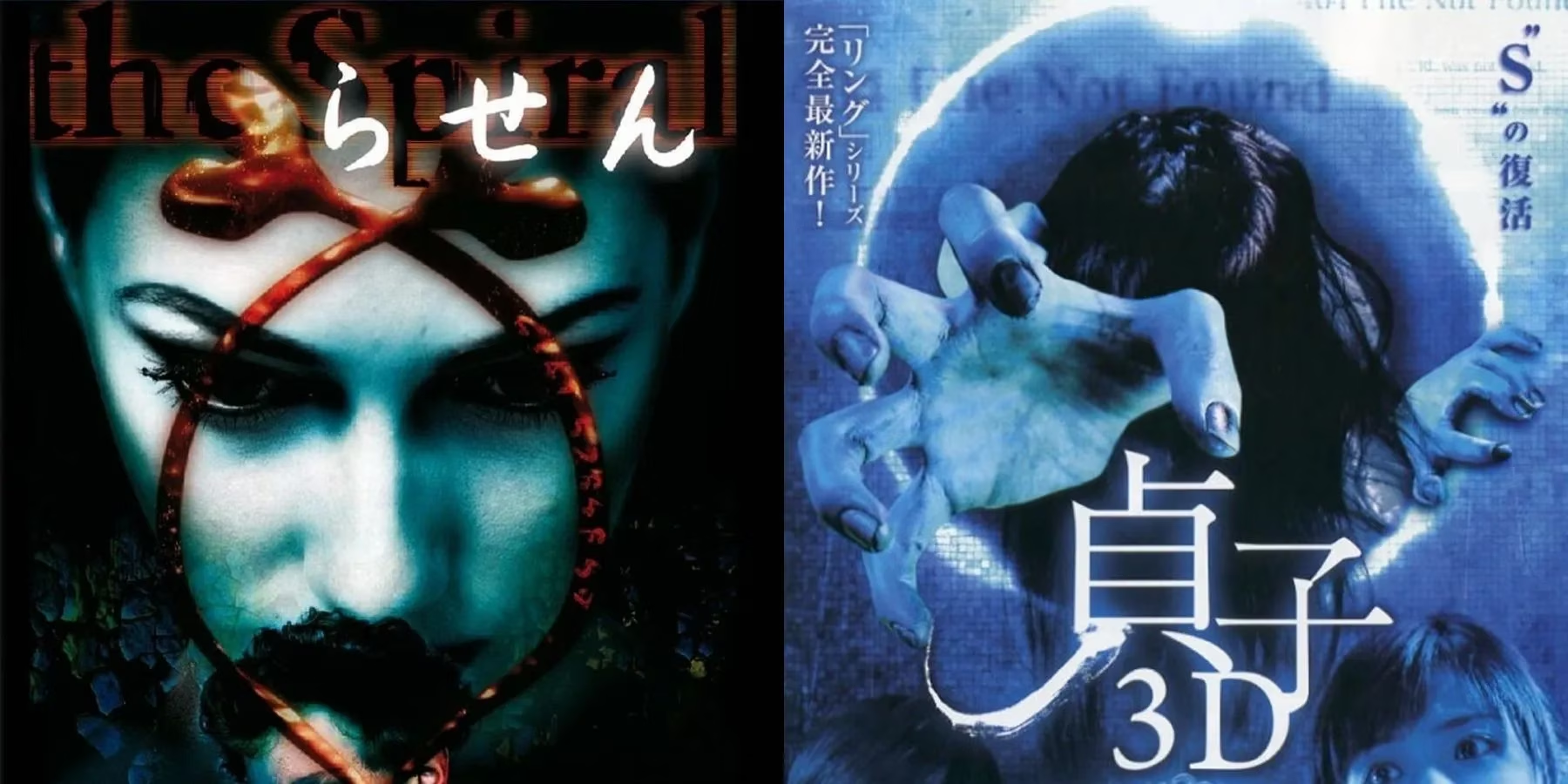
To make things even more confusing—and somehow more fascinating—the Ringu film franchise splintered into three distinct timelines. The most prominent, the Ring Cycle, begins with Ring 0 (2000) and flows through Ringu (1998), Ring 2 (1999), and Sadako (2019). This is the version most Dead by Daylight fans will recognize: Sadako as an unstoppable ghost, crawling from reflective surfaces with jerky, inhuman movements. Then there's the Original Cycle, which tried to follow the novels more closely with Spiral (1998) before getting scrapped due to poor sales. And just when you think you have it figured out, the Sadako 3D timeline arrives, spinning off after Ring 2 with two films released in 2012 and 2013. Three different stories, one central nightmare. You know that creeping feeling when the TV flickers? That’s her saying hello, no matter which timeline you’re stuck in.
Sadako herself carries a pain that makes her more than a simple monster. In both the novels and the films, she is the daughter of Shizuko Yamamura, a woman with latent psychic gifts. But Sadako’s abilities dwarfed her mother’s. Nensha, or thoughtography, allowed her to burn images and sounds directly into physical media—or even into another person’s mind. Before her death, her rage and suffering imprinted the now-infamous cursed videotape, a collage of distorted symbols and tortured imagery. After dying in that well—whether from starvation, violence, or simply despair—her power mutated. As a spirit, she gained horrific versatility: teleportation, possession, regeneration, and an immortality that makes the Entity’s realm feel almost like home. Survivors in Dead by Daylight quickly learned that hiding behind a pallet isn't much comfort when she can phase right through and give you that bone-chilling stare.
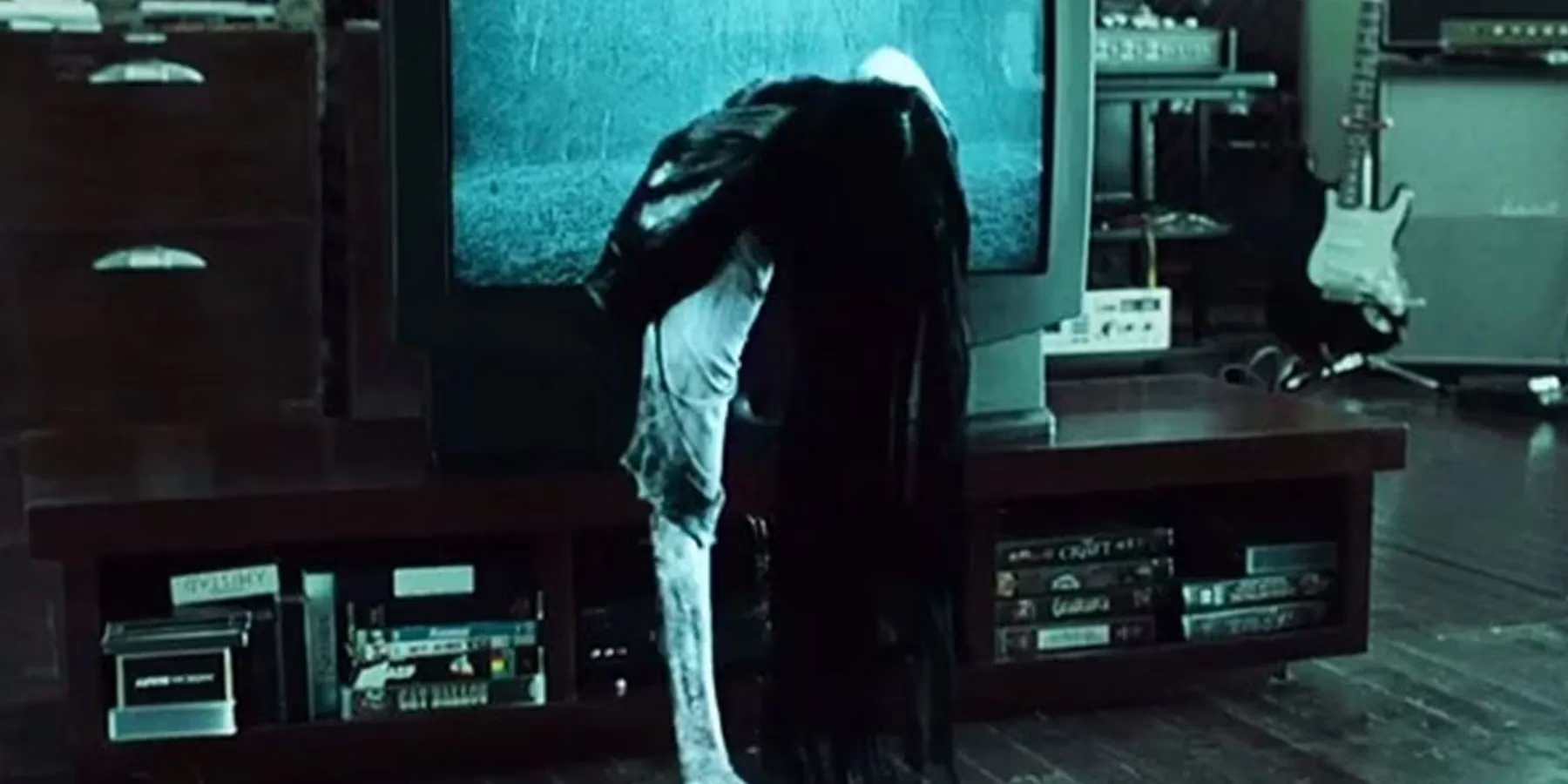
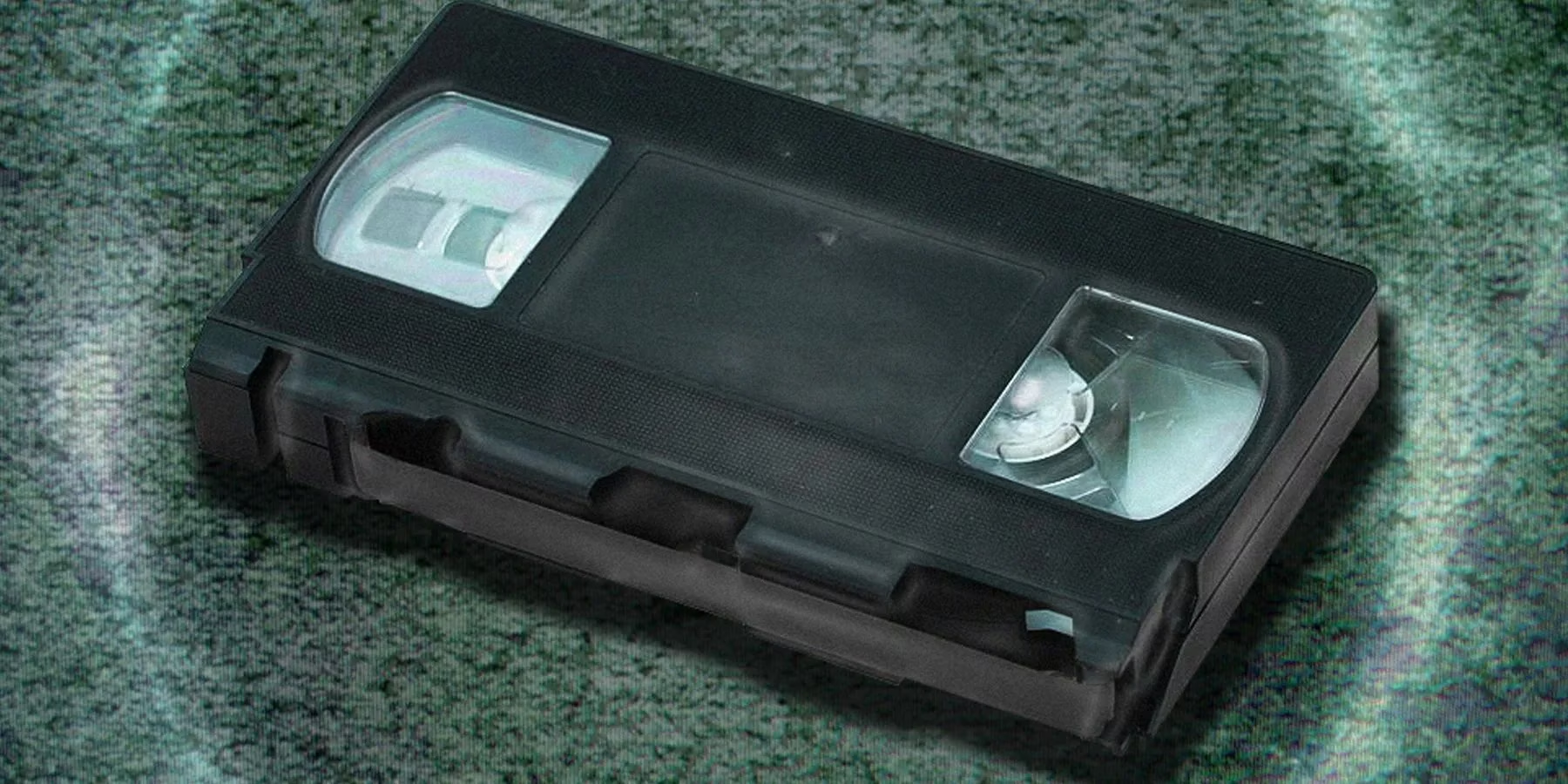
Of course, the cursed videotape itself deserves its own chapter of terror. In the films, watching it starts a countdown—seven days—before Sadako manifests through the nearest screen or reflective surface to deliver a death so horrifying it contorts the victim’s face into a mask of pure fear. The last part of the tape originally contained the escape clause: copy the tape and show it to someone else. But some joker overwrote that section before the events of the first film, dooming everyone who watched it to a frantic, hopeless scramble. The 2002 American adaptation added its own flavor, with Samara Morgan causing disturbing physical phenomena around her victims. Still, the Japanese original remains the gold standard of psychological dread, a perfect blueprint for Dead by Daylight's interpretation where Sadako slowly builds a condemned meter on survivors who ignore the scattered TVs around the map.
Diving into the novels reveals a rabbit hole that gets weirder the deeper you go. That videotape curse? It’s not really about the tape at all. The Ring Virus rewrites the victim’s DNA, forming a sarcoma in an artery that culminates in heart failure exactly seven days later. But the virus does something else too, something utterly chilling even to imagine. A second strain, shaped like a spermatozoa, can lie dormant—until it finds an ovulating host. Then it transforms into a Sadako clone. Yes, the original novel explains her resurrection through literal biological replication, and later books in the series, like Loop, explode this concept into a mind-bending virtual reality simulation called the LOOP Project. The lines between simulated suffering and real-world disease blur so completely that you start questioning whether Sadako’s curse is a haunting, an infection, or both. It’s enough to make anyone triple-check their VHS player, just in case.
And then, as if to prove that no horror icon can resist a good crossover, 2016 gave us Sadako vs. Kayako. Two friends, desperate to break the curse, drag Sadako into a house already saturated with the grudge-bound fury of Kayako Saeki from Ju-On. The plan? Let the two malevolent spirits destroy each other. What actually happened was far worse. The entities merged into a single nightmare called Sadakaya, sporting Sadako’s stringy hair and Kayako’s death rattle. It’s the kind of absurd, wonderful, keeps-you-up-at-night scenario that reminds us why we love these stories in the first place.
In the Fog, Sadako feels right at home—or as "at home" as a vengeful ghost can be. Her power set in Dead by Daylight captures the essence of the films: she projects herself through TVs, disappears and reappears with a flicker, and punishes those who ignore her long enough with an instant kill. Because the Entity always chooses killers whose cruelty mirrors some deeper tragedy, Sadako fits like a puzzle piece dipped in well water. And now, in 2026, with years of matches behind her, she remains a testament to the enduring power of a simple, sorrowful story about a girl who died screaming—and refused to stop.
This assessment draws from VentureBeat GamesBeat, emphasizing how licensed horror crossovers like Dead by Daylight’s Ringu chapter function not just as fan service, but as long-tail content strategy—turning recognizable mythologies (Sadako’s cursed media, multi-timeline lore, and “viral” dread) into sustained engagement through new mechanics, cosmetics, and recurring updates that keep the character culturally legible years after release.
Leave a Comment
Comments